


Keynote Speakers

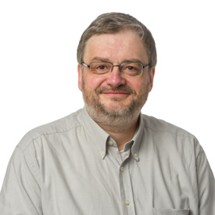
Prof. Vinit Kumar Gunjan
Senior Member of IEEE
Keynote Topic:
"Every Click Leaves a Trail: Uncovering Truth in the Digital Age"
Abstract:
In today's digitally connected world, cybercrimes occur in seconds, yet uncovering the truth behind them requires careful, systematic investigation. Every digital action - whether a click, message, transaction, or login—creates traces that can reveal intent, behavior, and accountability. Computer forensics is the discipline that transforms these hidden digital footprints into legally admissible evidence, enabling justice in an era where crimes are increasingly virtual and borderless. This talk explores the critical role of computer forensics in modern cybercrime investigations, with emphasis on banking and financial fraud, national cybersecurity challenges in India, and emerging global threats. It also highlights how forensic methodologies and tools operate within legal frameworks such as the Information Technology Act and GDPR, balancing evidence integrity with privacy requirements. By bridging technology and law, computer forensics has become indispensable for law enforcement, organizations, and policymakers striving to uncover truth, deter cybercrime, and uphold justice in the digital age.
Biography:
An active researcher; published research papers in IEEE, Elsevier & Springer Conferences, authored several books and edited volumes of Springer series, most of which are indexed in SCOPUS database. Awarded with the prestigious Early Career Research Award in the year 2016 by Science Engineering Research Board, Department of Science & Technology Government of India. Senior Member of IEEE, An active Volunteer of IEEE Hyderabad section; 2021 additional secretary; 2021 Vice Chairman – IEEE Computational Intelligence Society; volunteered in the capacity of Treasurer, Secretary & Chairman of IEEE Young Professionals Affinity Group & IEEE Computer Society. Was involved as organizer in many technical & non-technical workshops, seminars & conferences of IEEE & Springer. During the tenure he had an honour of working with top leaders of IEEE and awarded with outstanding IEEE Young Professional award in 2017 by IEEE Hyderabad Section.

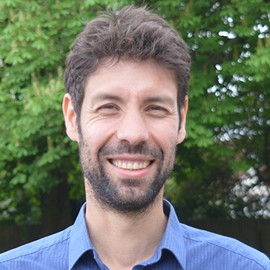
Prof. Saeid Sanei
Professor of Signal Processing & Machine Learning, College of Engineering & Computer Science (CECS), VinUniversity, Hanoi, Vietnam & Visitor to School of Neuroscience, Institute of Psychiatry, Psychology & Neuroscience King's College London
Keynote Topic:
"Adaptive Sensor Networks and their Application to Network Security"
Biography:
Saeid Sanei received his PhD from Imperial College London in 1991. He worked in National University of Singapore, King's College London, Cardiff University, University of Surrey, Nottingham, Imperial College London (as a Visiting Professor in Digital Health from 2017-2025), and King's College London (Visiting Professor since 2025). He is a Fellow of British Computer Society (FBCS), Fellow of IEEE (FIEEE), with effect from Jan. 1, 2026, and has been a member of prestigious IEEE MLSP and SPTM Technical Committees. His research involves development of adaptive and nonlinear systems including consensus and adaptive diffusion networks, tensor factorisation, graph signal processing, compressive sensing, subspace analysis, machine learning including deep neural networks, and many others mostly with applications to biological signals and systems. He has served as the Director of Digital Signal Processing Centre in Cardiff University and the Deputy Head of Computer Science Department at the University of Surrey. He developed four UG and MSc programs and many teaching modules and lectured more than 30 different subjects across Electrical Engineering, Computer Science, and Bioengineering. He served as the External Examiner to Glasgow University, London Southbank University, University of Mauritius, Singapore Institute of Management, Royal Holloway University of London (RHUL), where he also served as the External Assessor of the Academic Promotion Panel, and currently, East London University, London, UK. Saeid registered 5 patents, published 5 books (6th one in press), 7 Edited Books, 8 book chapters, and over 470 peer-reviewed papers. He also presented 34 keynote talks, tutorials, and workshops, and over 60 invited talks in prestigious international conferences and institutions and received several best paper awards. Saeid, internationally known for his brain research, has supervised 6 Postdocs and 47 successful PhD students as the main supervisor. He has been a Distinguished Lecturer to Nanyang Singapore and served as the REF Assessor and External to Hong Kong Polytechnic University during 2018-2019. He has been an Associate Editor for the IEEE Signal Processing Magazine, IEEE Signal Processing Letters, and Journal of Computational Intelligence and Neuroscience and several others. He organized and chaired several reputed conferences including IEEE ICASSP 2019. He collaborates with world renown research laboratories such as RIKEN in Japan, Temasek Laboratory in Singapore, and GIPSA-Lab in France as well as many Neuroscience and other clinical departments in the UK hospitals and worldwide. Last but not least, he is a Co-Founder of Brain Aware Charity.

Prof. Qiang QU
Shenzhen Institutes of Advanced Technology, Chinese Academy of Sciences
Keynote Topic:
""
Biography:
Qiang QU is a full professor at Shenzhen Institutes of Advanced Technology, Chinese Academy of Sciences. He is currently the director of Guangdong Provincial Blockchain and Distributed IOT Security Engineering Research Center, and the deputy director of Shenzhen Key Laboratory on High-performance Data Mining. He is a senior member of the China Computer Federation. Qiang received his PhD from Aarhus University supervised by Obel Professor Christian S. Jensen in 2014. He has working experiences from Innopolis University, Carnegie Mellon University, ETH Zurich and Singapore Management University. His research endeavors focus on blockchain/Web3 technologies, databases, data mining, and advanced data intelligence systems. He joined Chinese Academy of Sciences at the end of 2016, and he was promoted to a full professor in 2020. He has been a principle investigtor (PI) for a number of projects, and he is now the chief scientist for a project supported by National key research and development program of China.

Prof. Bing Xue
Victoria University of Wellington, New Zealand
Keynote Topic:
"Evolutionary Automated Deep Learning for Image Analysis and Real-world Applications"
Abstract:
Image analysis stands as a foundational pillar of modern computer vision, powering diverse real-world applications across intelligent systems. While deep learning, particularly deep neural networks (DNNs), have driven remarkable progress, designing optimal DNN architectures remains a significant challenge, demanding substantial domain expertise and computational resources. Evolutionary computation, a core paradigm of Computational Intelligence, offers a promising approach by automating the design of deep learning architectures for tasks like image classification. These methods show great potential in advancing both deep architectures and overall algorithmic development. This talk will present an expanded perspective on deep learning and survey the cutting-edge work in evolutionary deep learning. We will also explore recent advancements to automatically evolve deep structures and perform feature learning for image analysis, especially regarding interpretability and visualisation. The talk will also discuss practical applications of these techniques in solving real-world problems, demonstrating the versatility and efficiency of evolutionary deep learning as a core methodology for next-generation intelligent systems.
Biography:
Bing Xue is a Fellow of IEEE and Fellow of Engineering New Zealand. She is currently Professor of AI, Deputy Head of School for Engineering and Computer Science, Deputy Director of Centre for Data Science and AI, at Victoria University of Wellington (VUW), New Zealand. Her research focuses mainly on AI, machine learning and evolutionary computation, such as evolutionary deep learning, multi-objective machine learning, feature learning, and image analysis, and their real-world applications in aquaculture, marine, biology, healthcare, and forest. She has over 500 fully refereed publications and leading several prestigious research grants. She is an AdCOM member of IEEE CIS, member of ACM SIGEVO Executive Committee, main organiser of many international conferences, e.g. General Chair of PRICAI 2025 and IVCNZ 2025, and Conference Chair of EuroGP 2025/2024 and IEEE CEC 2024, Associate Editor of international journals, e.g. IEEE TEVC, IEEE CIM, and ACM TELO.